
Author Guidelines
These guidelines help authors prepare manuscripts in a consistent format for efficient editorial processing and peer review workflows. Authors are requested to follow these instructions carefully before submitting their manuscript.
1. Before you submit
JCMA publishes original research, reviews and clinical reports in medical, biomedical and health sciences. Manuscripts must be original, not published elsewhere, and not under consideration by any other journal. Deposit of a preprint on a recognised preprint server does not constitute prior publication. All submissions are subject to double-blind peer review.
Please read the journal’s publication ethics policy before submitting.
Article types
| Type | Word limit* | References | Tables + figures | Abstract |
|---|---|---|---|---|
| Original research | 3,000 | 40 | 5 | Structured, 250 |
| Systematic review / meta-analysis | 5,000 | No limit | 5 | Structured, 250 |
| Review | 4,000 | 80 | 5 | Unstructured, 200 |
| Case series (≥4 cases) | 2,000 | 15 | 3 | Unstructured, 150 |
| Case report (1-3 cases) | 1,000 | 10 | 2 | Unstructured, 150 |
| Editorial# | 1,500 | 15 | 1 | None |
| Letter to the editor | 500 | 5 | 1 | None |
*Word counts apply to the main manuscript text only. Title page, abstract, references, tables and figure legends are excluded
#Invitation only
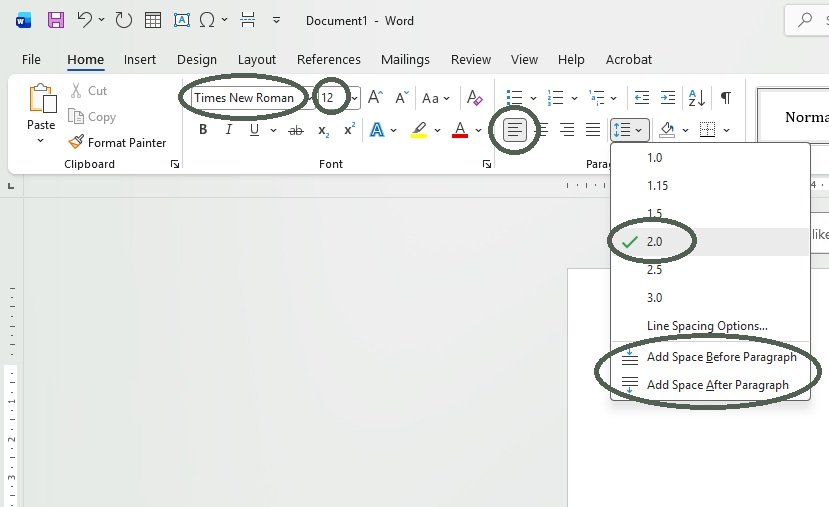
2. Manuscript preparation
Manuscripts must be written in clear, concise English. Authors may use either British or American spelling, but it must be consistent throughout the manuscript.
- Microsoft Word (.doc or .docx) format
- Font: Times New Roman
- Font size: 12
- Line spacing: Double line spacing
- No space before paragraph
- No space after paragraph
- Keep text left aligned
- Page numbers must be included at the bottom
3. Files to submit
Submit two separate files, along with supplementary files as required.
3.1 Title page file
The title page file contains the following information in sequence:
– Cover letter
– Type of study: Select the appropriate study type. e.g. Original research, case report, case series, review, systematic review and meta analysis, letter to the editor, or editorial
– Title: add a suitable study title
– Running title: maximum 50 characters long
– Author names: List all authors’ names in sequence. Kindly note that author order cannot be changed once a manuscript is processed, unless suitable justification signed by all the authors is submitted
– Author affiliations: The author affiliation represents the institute name and address to which this work is attributed. Format: Department, Institute name, City, Country
– Author emails: Add emails of all authors
– ORCID iD: All authors must add their ORCID iD. ORCID is an independent, globally recognized researcher identification platform. Registration for an ORCID iD is free of charge and is required for accurate author identification. For more information or to create an ORCID iD: https://orcid.org/signin
– Corresponding author: Add name, address, phone number (with country code) and email of the corresponding author
– Acknowledgements: Add acknowledgements, including names of individuals whom the authors wish to acknowledge
– Conflicts of interest: Disclose any potential conflicts here, including but not limited to financial, professional, or personal relationships that could inappropriately bias or influence authors’ actions and judgment. If there are no such conflicts please write the statement “The authors declare no conflicts of interest”
– Funding source: If the study received any grant or funding, its details must be disclosed in this section. Write “none” if no funding was received from the institute, university or any other external/ third party
– Ethical considerations: Mention committee name, approval number and date; consent statement where applicable. The ethical principles in research, laid down by the Declaration of Helsinki in 1964 and last revised in 2024 and the local/ national ethical guidelines (e.g. 2017 ethics guidelines of the ICMR in India govern the conduct of scientists in research involving human subjects/ participants. All research studies must have obtained permission from their institute’s ethics committee (IEC). Waivers for IEC clearance must also be documented. Clinical trials shall be registered as per the policy of the country where such a research was conducted. Informed consent is mandatory for publishing case reports and case series. Obtaining waiver from the institute ethics committee is not a replacement for patient consent in such scenario.
– Use of artificial intelligence: AI tools used in preparing the manuscript shall be disclosed including the name of the tool, its model/version and extent of use. At present, AI can only be used for language editing as per journal policy. This policy will be reviewed as practices evolve; authors should check the current version before submission. AI tools cannot be listed as authors.
– Data availability: Where the data supporting the findings can be obtained, or the reason it cannot be shared.
– Author contributions: Authorship is based on substantial contribution to the research/manuscript. For original articles, this includes:
(i) Research: Contribution to atleast one of the following aspects of research i.e. concept, literature search, designing data acquisition tool(s), data collection, data analysis
AND
(ii) Manuscript drafting OR Manuscript revision
(iii) Approval of finalized version of the manuscript
All authors shall be responsible for the contents of the manuscript and the ethical and legal responsibilities of their research.
3.2 Blinded manuscript file
The complete manuscript with no author names, affiliations, institutional identifiers, acknowledgements or funding details. The manuscript shall not enable a reviewer to guess the author name and institute.
Structure of the manuscript
The main manuscript file shall comprise of the following in sequence:
– Title: Write the title of the study in this file again since the title page file is not shared with the reviewers (if the manuscript passes editorial desk assessment and is sent for review)
– Abstract: Kindly refer to the word limit and structure requirements at the start of these guidelines. Abstract may be structured or unstructured depending upon the type of manuscript being submitted. Structured abstracts should carry the headings background, methods, results and conclusions
– Keywords: Provide three to five keywords, preferably from MeSH.
– Manuscript content: This is the main content of the manuscript and shall be structured according to the type of manuscript being submitted.
- Original research and systematic reviews: follow the IMRAD structure i.e. Introduction, Materials and methods, Results, Discussion, Conclusions.
- Case reports: follow Introduction, Case description, Discussion, Conclusions.
- Reviews, and letters may be structured as the subject requires.
- Editorials: They are invitation only and discussed separately with the invited scientist/ researcher
References
JCMA follows the publisher’s house style, based on NLM/PubMed, numbered in the order of first citation in the text. Citation numbers appear in square brackets before the punctuation, as [1] or [2,3].
List all authors up to six; where there are more than six, list the first six followed by et al. Include the DOI where one is available.
References should be verified against the original sources. Citations generated by reference managers or AI tools are the authors’ responsibility to check.
A few reference styles are provided below and authors are requested to format the references as per styles given below:
Journal article
Authors (upto 6 followed by et al). Article title. Journal name in italics. Year;Volume:page numbers
Examples
Kendirci M. How to write a medical book chapter? Turk J Urol. 2013;39:37-40.
Seki K, Sueyoshi K, Miyoshi Y, Nakamura Y, Ishihara T, Kondo Y, et al. Complement activation and lung injury in Japanese patients with COVID-19: a prospective observational study. Sci Rep. 2024;14:24895.
Book Chapter
Author A, Author B (Year). Chapter title. In: Editors names (Ed) Book title or name. edition. Publisher (Publisher country)
Examples
Tikka S, Kopra J, Heinäniemi M, López-Pernas S, Saqr M (2024). Introductory Statistics with R for Educational Researchers. In: Saqr M, López-Pernas S (Ed) Learning Analytics Methods and Tutorials. Springer (Switzerland).
In the above example, note the use of full stops, comma etc. besides the fact that some of the authors of this chapter are also the editors of this book which does not have an edition (hence edition number is not mentioned in the reference).
Kalarani IB, Veerabathiran R (2023). Diabetes and Neurological Disorder. In: Noor R (Ed) Advances in Diabetes Research and Management. Springer (Singapore).
Internet source
Title of source [Internet]. Place of publication. Publisher. URL or link (Last accessed on DD-Month-YYYY)
For detailed NLM style specifications, consult the NLM Citing Medicine guide (external link to NLM, USA).
Tables and figures
Number consecutively in order of citation. Each table needs a concise title; each figure a legend that allows it to be understood without reference to the text. Define all abbreviations in a footnote.
Figures should be submitted at a minimum of 300 dpi in TIFF, PNG or JPEG format. Patients must not be identifiable in any image. Where any third-party material is reproduced, written permission from the copyright holder must be provided at submission.
4. Reporting guidelines
Manuscripts must be prepared in accordance with the reporting guideline applicable to the study design — CONSORT for randomised trials, PRISMA for systematic reviews, STROBE for observational studies, CARE for case reports, STARD for diagnostic accuracy studies. The completed checklist should be uploaded as a supplementary file. Guidelines are available from the EQUATOR Network.
5. Ethics requirements
Human participants. Research involving human participants, human material or identifiable human data requires approval from an institutional ethics committee. The approval number and date must be stated in the title page file as described above. Where the committee has granted formal exemption, the exemption letter is required. Research must conform to the Declaration of Helsinki and to the to the national ethical guidelines applicable in the country where the research was conducted.
Clinical trials. Registration with the Clinical Trials Registry of the country in which the research is carried out or another WHO primary registry is required. The registration number must be stated in the title page file under ethical considerations.
Case reports and case series. Written informed consent for publication is required from every patient described, or from the next of kin where the patient is deceased or lacks capacity. Consent must cover publication of clinical details and any images. Authors must retain the signed consent and confirm at submission that it has been obtained; the journal may request a copy. A case series of four or more patients additionally requires ethics committee approval or exemption.
Animal research. Approval from the institutional animal ethics committee is required, with the approval number stated in the title page file under ethical considerations, and reporting should follow ARRIVE guidelines.
6. Submission
Manuscripts are currently received by email at editor@jcma.in. Submit the title page file and the blinded manuscript file, together with any supplementary files. Acknowledgement is sent within three working days. The journal’s online submission platform will open at cienciaflow.com, and this section will be updated when it does.
7. Article processing charges (APC)
JCMA is a gold open-access journal. No charge is made at submission, and no charge is made on manuscripts that are not accepted.
An article processing charge (APC) of ₹12,000+18% GST applies on acceptance of a manuscript. The charge covers editorial processing, production, hosting, DOI registration, similarity screening and long-term preservation. APC is payable before the accepted manuscript enters the production phase by the publisher. For residents of low income countries (as per World Bank classification), partial or full waiver requests mailed to the editor before submission of the manuscript shall be considered and decided independently of the editorial process.
Note: This charge is waived in full (i.e. no APC shall be charged) for all manuscripts submitted on or before 31-December 2027. An advance notice will be published on this website a few weeks before the waiver ends, and subsequently if the APC are revised so that the APC levied are always highlighted transparently. Charges are never applied retrospectively: the position at the date of submission governs, so a manuscript submitted during the waiver period is published free of charge regardless of when it is accepted.
8. Copyright
Authors retain copyright. Articles are published under a Creative Commons Attribution 4.0 International license (CC BY 4.0). Authors may deposit any version of their work in a repository or scholarly network at any time. Deposited versions should cite the published article and include its DOI. Full terms are set out in the publication ethics policy.
9. Affiliations
Affiliations are published as authors state them. JCMA takes no position on jurisdictional or territorial claims.
10. Contact
Queries about submission or these guidelines: editor@jcma.in